

Colombia Huila - Caturra 86, Double Fermentation
Colombia Huila - Caturra 86, Double Fermentation
Light Roast
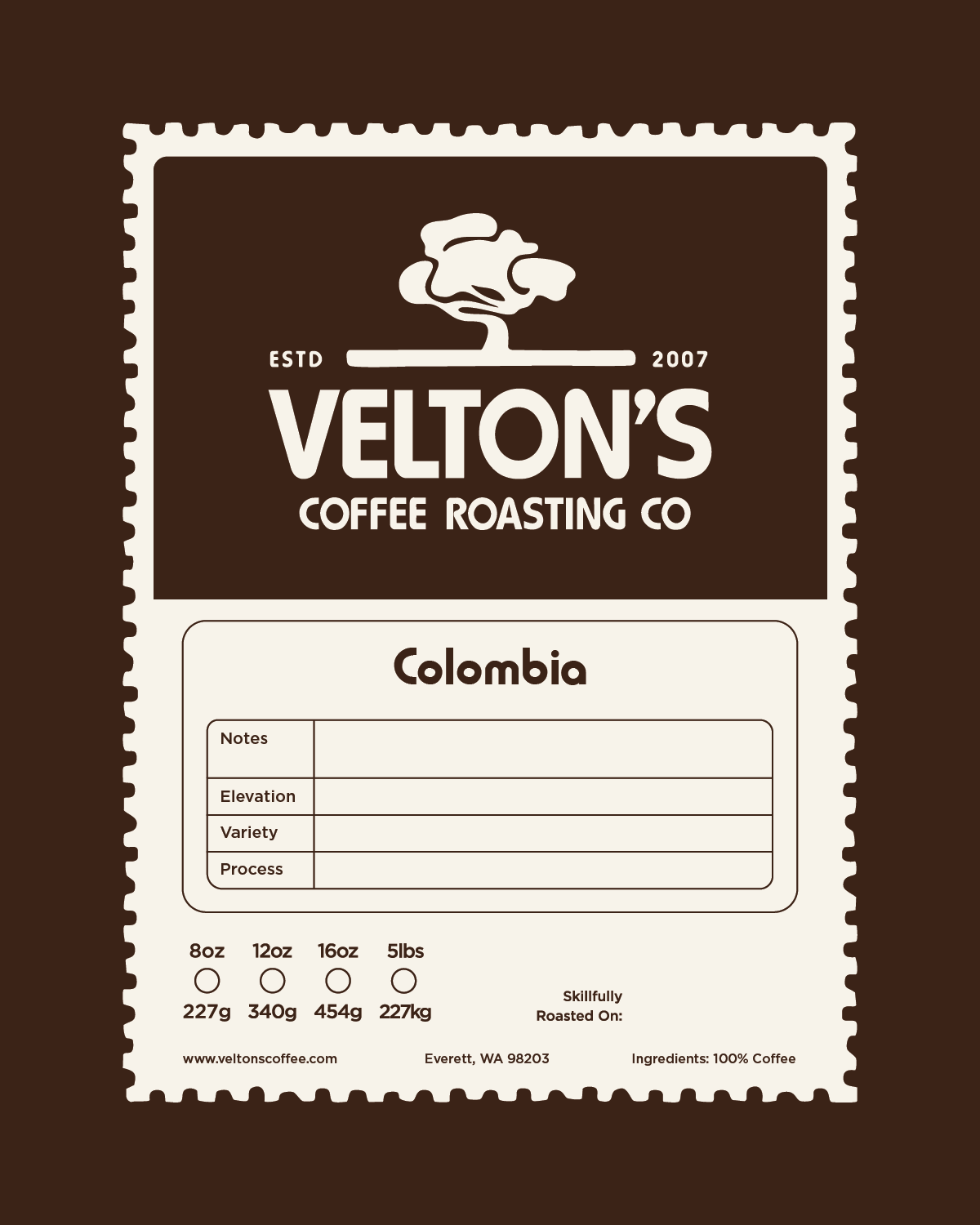
Tasting notes: Heavier-bodied, clean, fruity, and very sweet with strawberry starburst, blackberry, chocolate, white peach, and guava.
Country: Colombia
Region: South of Huila
Farm: Smallholder farmers
Elevation: 1550 - 1900 MASL
Variety: Caturra
Processing: Washed/Double Fermentation
Couldn't load pickup availability
We roast to order & ship on Tuesdays.
We roast to order & ship on Tuesdays.
Website orders are roasted and packed every Monday and picked up Tuesday by USPS for delivery. As we only roast exactly as much of each coffee as we have known orders for, please be sure and place your order no later than 10 AM (PST) on Monday for fulfillment that week. Orders that come in later than that may not be fulfilled until the following week.
$8 flat rate shipping, free over 8 lbs
$8 flat rate shipping, free over 8 lbs
Orders weighing 0 - 7.99 pounds ship for $8.00.
Orders weighing 8 pounds or more ship for free!
About this coffee
This double-fermented, single-variety Caturra smallholder lot is cultivated in carefully selected plots within farms that offer the best agronomic conditions, ensuring a high-quality raw material from the very beginning. Harvesting is done manually, cherry by cherry, by the producers themselves. Once picked, the coffee undergoes a flotation process to eliminate defective beans. It is then placed in concrete tanks to begin a first natural and carefully controlled fermentation, which lasts between 28 and 40 hours. After that time, the coffee is depulped and goes through a second fermentation that lasts between 24 and 36 hours. During this period, the producers stir the coffee constantly to ensure a uniform and consistent fermentation. Once the coffee reaches its optimal fermentation point, it is thoroughly washed with clean water in three stages, allowing for the complete removal of the mucilage and a final physical selection to eliminate any remaining defective beans. The drying process is carried out under the sun, on raised beds or solar patios, taking advantage of natural wind and heat. The beans are constantly moved to ensure uniform drying and to avoid over-drying. The goal is to bring the coffee to the ideal moisture content of 11%, preserving its freshness, structure, and cup quality.
History of Colombian Coffee
As with many coffee origins, it is believed that coffee was first brought to Colombia by priests, arriving, perhaps, within a decade or two after coffee first came to the Americas via the Caribbean in the first half of the 17th century. It was likely a garden crop grown for local consumption and barter for decades. Unlike other coffee regions, we have the story of a priest named Francisco Romero, who could be called the father of commercial coffee cultivation in Colombia. The folkloric tale goes that in the early 1800s, Father Francisco, hearing confessions in the northeastern town of Salazar de la Palmas, assigned planting coffee to his parishioners as penance for their sins. The Archbishop of Colombia heard about this and ordered all priests to adopt the practice. Commercial production of coffee expanded quickly, moving into regions where the growing conditions were ideal.
Growing Coffee in Colombia
Even though it’s been 4,000 years, the soil resulting from the last major eruption of Tolima is still considered “young soil,” filled with nutrients that are no longer found at the same levels in old soil. There is a long list of elements on offer in volcanic soil that are fading or absent in other soils, such as high levels of potassium and nitrogen. Also present is something called “Boron,” which arrived from outer space a long time ago, and is important to cell walls, the creation of enzymes, and the production of flowers and fruit, meaning Boron contributes to yield. Beyond the nutrients, the structure of volcanic soil is also beneficial to coffee growing. It can soak up and hold moisture while, at the same time, facilitating good drainage so water doesn’t pool, which is not good for coffee plant roots. Coffee plants like to take a drink, then take a break. Also, volcanic soils are usually found on an incline, which also helps with drainage.