

Ethiopia Yirgacheffe Idido
Ethiopia Yirgacheffe Idido
Light Roast
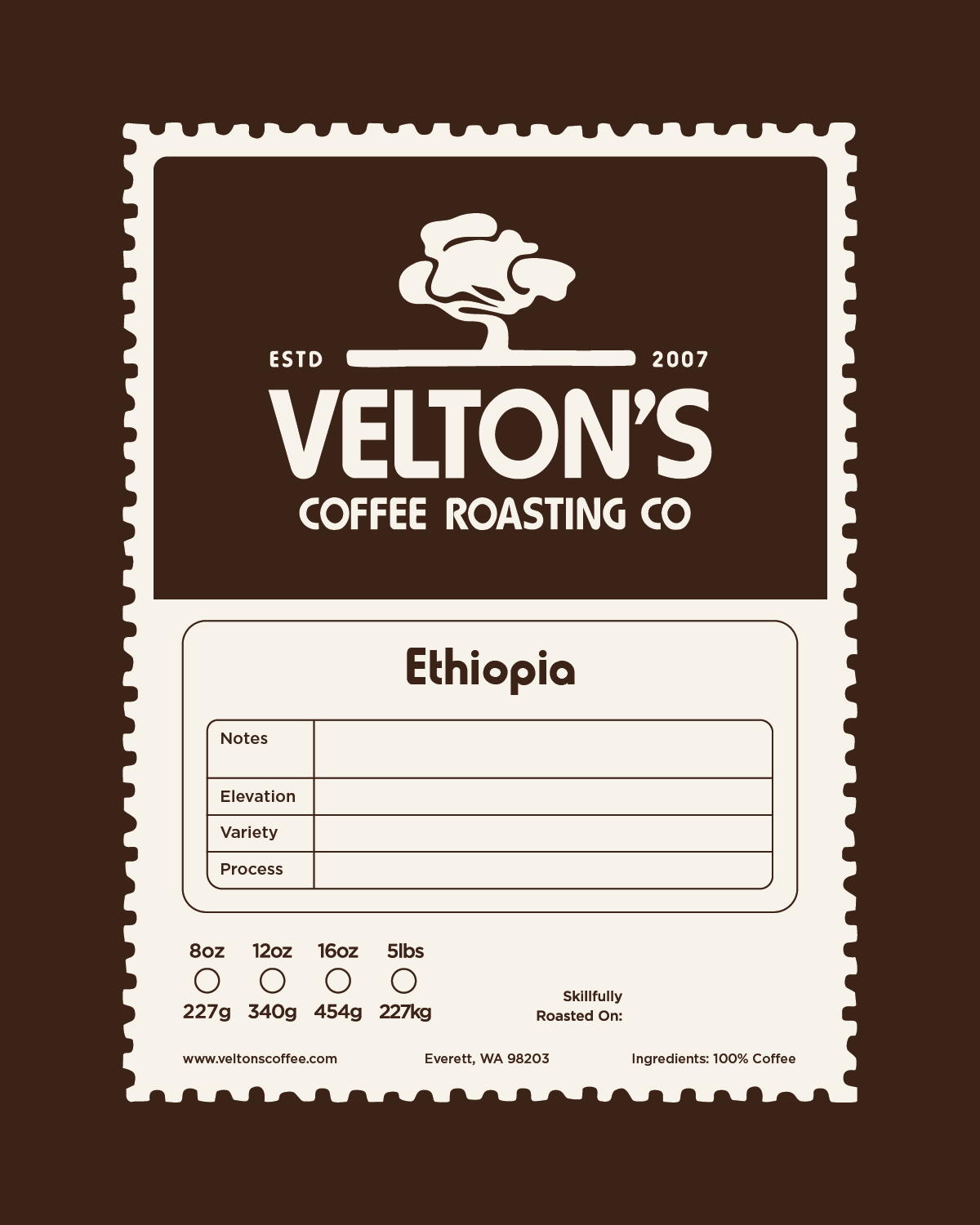
Tasting notes: Clean, bright, and tangy with stone fruit and fresh lemon, sweet with syrupy caramel.
Country: Ethiopia
Region: Idido, Yirgacheffe
Farm: smallholder farmers
Elevation: 1850-1880 MASL
Variety: Heirloom
Processing: Washed Special Prep
Couldn't load pickup availability
We roast to order & ship on Tuesdays.
We roast to order & ship on Tuesdays.
Website orders are roasted and packed every Monday and picked up Tuesday by USPS for delivery. As we only roast exactly as much of each coffee as we have known orders for, please be sure and place your order no later than 10 AM (PST) on Monday for fulfillment that week. Orders that come in later than that may not be fulfilled until the following week.
$8 flat rate shipping, free over 8 lbs
$8 flat rate shipping, free over 8 lbs
Orders weighing 0 - 7.99 pounds ship for $8.00.
Orders weighing 8 pounds or more ship for free!
About this coffee
The Idido Washing Station, located in the Idido village, or kebele, and operated by Ardent Coffee Exporter, serves the villages surrounding Yirgacheffe town, including Idido, Aricha, Worka, Chelbesa, and Halabariti. 1200 farmers regularly deliver coffee cherry throughout the November-January harvest season.
The Malebo Project is a coffee line by Idido Washing Station where Grade 1 seeds from the Idido area were specifically selected and washed. This was Idido’s only washed coffee this season. With the special prep (what the producers generally call “Premium” in Ethiopia) the cherries are collected from a limited number of small-holder farmers. 90% of the cherries are perfectly picked, the right red color. 5% semi-red and 5% overripe. All of it is processed and stored separately from the other lots. They generally produce a very small number of bags in this way every year. In most instances, cherries used to produce these lots are collected from a day lot (picked in one day). The coffee was hand-sorted throughout the entire 18-day drying process and then rested for four weeks before milling, once the seeds had reached a consistent moisture content of 11.2%.
$0.10 per pound from the Malebo proceeds supports the Ardent Children Center, a local orphanage built and funded by Ardent Coffee Exporter. The ACC was established to provide orphan and semi-orphan children with adequate food, healthcare, education, and play, ensuring a safe and happy childhood.
History of Coffee in Ethiopia
Coffee is ancient in Ethiopia, but coffee farming is not. By the end of the 9th Century coffee was actively being cultivated in Ethiopia as food, but probably not as a beverage. It was the Arab world that developed brewing. Even as coffee became an export for Ethiopia in the late 1800s, Ethiopian coffee was the result of gathering rather than agricultural practices. A hundred years ago, plantations, mostly in Harar, were still the exception, while “Kaffa” coffee from the southwest was still harvested wild. In 1935, William Ukers wrote: “Wild coffee is also known as Kaffa coffee, from one of the districts where it grows most abundantly in a state of nature. The trees grow in such profusion that the possible supply, at a minimum of labor in gathering, is practically unlimited. It is said that in south-western Abyssinia there are immense forests of it that have never been encroached upon except at the outskirts.”
Growing Coffee in Ethiopia
As the birthplace of coffee, Ethiopia is home to more varieties of coffee plants than any place on earth, much of it still growing wild, and much of it still undiscovered. All Ethiopian coffee is Arabica and at least 150 varieties are commercially cultivated. Traditionally, these have simply been labelled as “heirloom varietals”; however, this is changing as the Jimma Agricultural Research Center works to identify species. Although there are a few estates in Ethiopia, 95% of coffee is grown by small landholders in a wide variety of environments, including “coffee forests” where coffee grows wild and is harvested by the local people. All specialty grade Ethiopian Coffee is grown above 4,000 feet and most above 6,000. In the highlands of Sidamo and Yirgacheffe, coffee can grow above 7,000 feet.